

When did we normalize disordered eating?
A case for trusting our bodies (and a personal history)

Growing up, the only woman I knew with a healthy relationship with food was my dad’s wife. I remember the awe with which I watched her make pancakes or banitsa for breakfast and then eat as much as she felt like. How she piled her plate at the buffet table on our summer holiday in Greece. She always had bars of Lindt milk chocolate open in the door pockets of her car. She did put honey or sesame tahini in her pancakes, she did have a plate of fruit before the one of pastries at the buffet table, raw cashews in the other door pocket of her car. She liked eating healthily. But she didn’t deprive herself of anything she craved. And here’s the best part: she was a ballet dancer and also had the most beautiful body of a woman her age that I had seen in real life. You might think, ‘I get it now, it’s because of all this exercise she was doing!’
But it wasn’t this. It was something else, that seems like such a foreign concept nowadays: she trusted her body.
We don’t trust our bodies anymore. We do the opposite of trust. We control and we tame. We repress them, mould them, measure all their metrics (sleep, steps, heart rate, glucose levels) so we can exercise maximum control for optimal performance. Optimal performance for what, one might wonder? Since most of us are not Olympic athletes or electronic gadgets? Well, for output! For Instagram likes! For productivity.
My dad’s wife is 50 now, and she follows a strict diet. I find this egoistically sad because I can’t think of a single woman I know well with a healthy relationship with food anymore. Moreover, I see it as a bigger metaphor for the state of our society as a whole. She was the last woman standing, and she has given in too.
I had an eating disorder in my teenage years, and I remember that the way I spoke about food then (as if sautéed potatoes were synonymous with the Third Reich) made people around me flinch. It made them judgmental and scared, rightfully so. ‘She clearly has a problem,’ they thought to themselves. Later, when I went to therapy, part of my work was around changing this perception of food as ‘good’ or ‘bad’ (or in my case ‘Nazi’) and also the way I spoke about it.
What I find bizarre now is that everyone seems to be talking that way about food, and they don’t even find it abnormal or worrisome or something they should be ashamed of or strive to change. They voice out loud their self-imposed ban on croissants because it will give them cellulite. They declare they can’t eat the rice because: no carbs after 8 pm. They post a photo on Instagram of blueberries and caption it ‘treat’. They announce over the megaphone that they should run five extra kilometers on the treadmill today because they had an extra glass of wine last night.
When they haven’t eaten all day or have had just a single meal, they flaunt this fact with pride and one-upmanship as if they’ve transcended existence and physical limits while the rest of us, mortal losers, have been succumbing to primitive hunger signals three times per day. When you order dessert or finish a pizza in such company, they look at you with the eyes of someone who is witnessing a crime in real time. And when they have accidentally done so themselves – taken a spoonful of the chocolate soufflé, a slice from the bread basket – they self-flagellate out loud, they complain, they confess, neurotically seeking absolution of their guilt.
Okay, you might think, but maybe they have a normal relationship with food, so it’s okay for them to talk this way! Maybe they are overweight and need to lose weight, so it’s okay for them to diet. Maybe they have diabetes or obesity. Maybe. But, I don’t think that’s the case.
Our obsession with healthy eating seems to be a function and a natural consequence of our obsession with a particular Western body standard. Because many of us have fallen victim to the perpetual pursuit of those perfect proportions and, as a result, do embody them, the standard has become even more ubiquitous and omnipresent, further fuelling our insecurity and low self-esteem, which then feeds our obsession but starves our bodies. Social media is a big culprit in this toxic scheme, as it allows us to compare ourselves to women taken entirely out of context. Some of these women are paid to look a certain way as their profession. (Looking this fit, this good, is what they do for a living. They don’t try to squeeze it in before lectures or after work.) Others may look this way, but the sacrifice–what they pay for this–is out of shot. And yet others don’t look this way at all, but FaceApp or Photoshop has made them.
The point, though, is that we no longer covertly or shamefully– but rather quite openly and proudly–measure our worth by our looks, by the calories on our plates. And because everyone seems to be avoiding carbs and sugar, not eating after 11 am, it no longer seems weird. It seems normal. It seems the ‘healthy’ choice. And is it?
Well, if you ask me, it depends. I think it’s fine if you want to eat healthy or healthier because you are so attuned to your body that you feel the physical difference after a radish compared to a Toffifee. If you want to feel better and live longer. But how many of us, as thirty-year-olds, can honestly state this as the primary reason for our preoccupation with food? And even if that were the case, the line between this desire and a dysfunction is so incredibly thin.
Wikipedia defines Orthorexia nervosa as “characterized by an excessive preoccupation with eating healthy food.” Eatingdisorders.org clarifies further: A person with orthorexia is fixated with the quality, rather than quantity, of their food to an excessive degree. Orthorexia can start with ‘healthy’ or ‘clean’ eating, then progress to the elimination of entire food groups such as dairy or grains, and then to the avoidance of foods such as those with artificial additives, foods treated with pesticides, or particular ingredients (e.g. fat, sugar or salt).
The NHS site cites the following signs as symptoms of disordered eating: spending a lot of time worrying about your weight and body shape; eating very little food; exercising too much; and having strict habits or routines around food, to name a few. I am struggling to think of many people who don’t fall under at least one of these criteria.
My disordered eating began one idle day in high school in the chemistry classroom. I was eating Bake Rolls, minding my alkali metals, when my boyfriend’s best friend elbowed him. ‘Look at your girlfriend’s thighs. She has cellulite!’ he exclaimed nonchalantly, oblivious to how he was changing the course of my life in an instant as if he’d uttered a spell. Like Maleficent in Sleeping Beauty, he was cursing me with sixteen years of white flour and olive oil paranoia, of measuring my worth by the scales.
The whole classroom turned their attention away from the pink liquid in their flasks and toward my cellulite. The baked roll stuck in my esophagus. During the break, I ran to the bathroom and locked myself in a cubicle. Tears followed, many tears, and they couldn’t stop, as if someone had turned on a tap. I got on a plane to Prague later that afternoon with my mother, and while the stewardess was distributing pretzels and sandwiches, I made silent vows to myself to never allow these food groups to enter through my mouth again. Salty tears mixed with still water in the cup on my tray. There wasn’t going to be orange juice for me anytime soon. And yet these tears were just the beginning of a long, serotonin-deprived, nutrient-deprived, sleep-deprived period that culminated in a psychiatrist advising my parents that I ought to procure some of that serotonin externally with antidepressants.
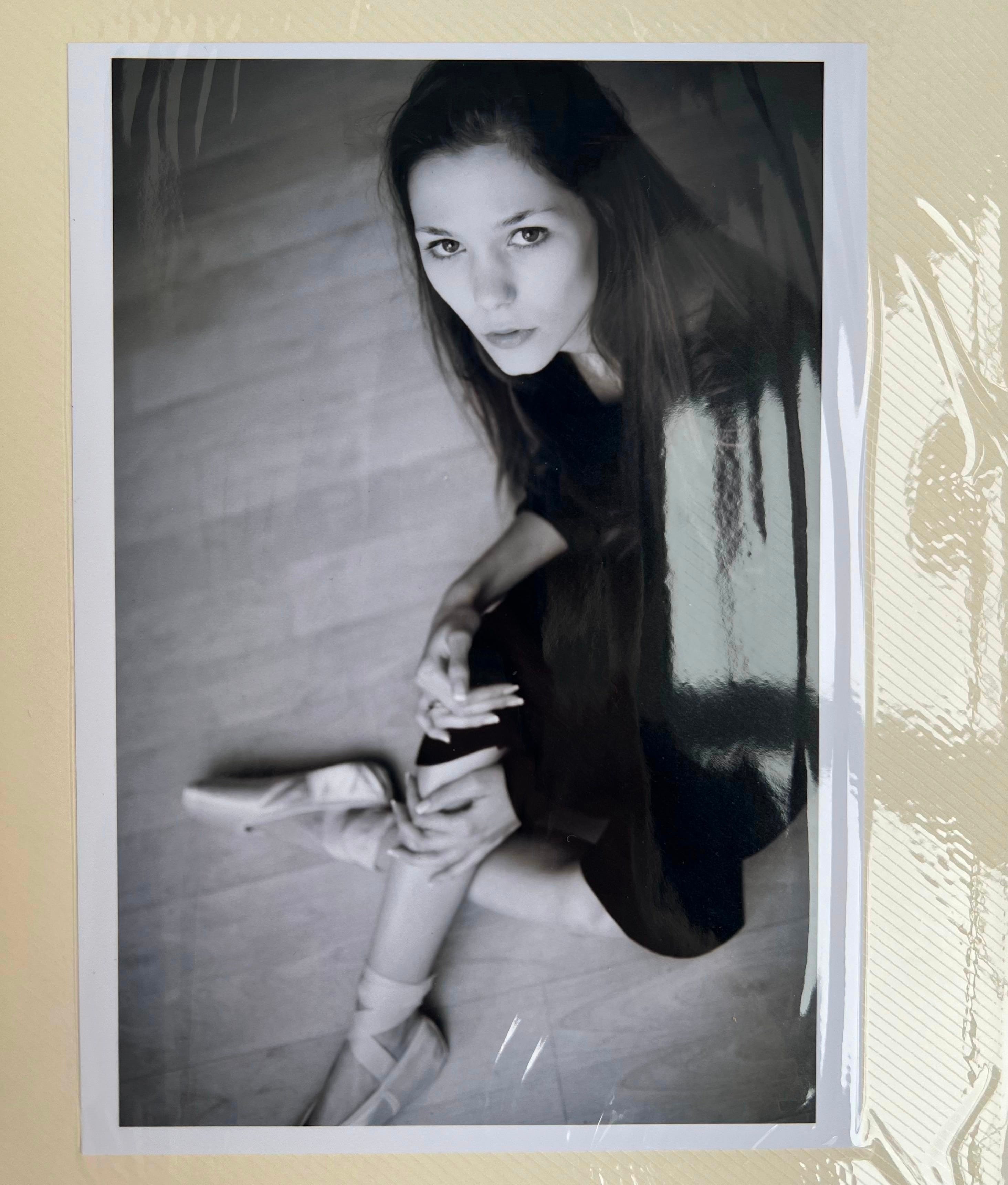
Mental health aside, I recovered physically from my anorexia pretty quickly. I didn’t have body dysmorphia, and I didn’t like myself skinny. I’d always been thin, and when I lost all that weight, I looked like a ‘skeleton’ as many strangers (hairdressers at the beauty salon, ladies at the till, acquaintances of my parents) loved to point out. From being shamed for my cellulite, with very little interlude, I went to being shamed for my lack of.
My relationship with food was slower to recover than my body weight. (Interestingly, though, everyone thought that since I no longer looked ‘too skinny’, I was okay. Perhaps this is how we diagnose disorders, then? A subjective perception of someone’s body? But these aren’t the criteria for one.) I tracked ‘macros’ for years afterwards, flipped my fear of gaining weight to that of losing weight. For a long time, it was both fears simultaneously. As a therapist had called it – ‘a very thin rope to walk on.’
But then one bright day, I met a woman called Nicola Jane Hobbs, and she introduced me to a concept called ‘intuitive eating’. She taught me how to do what my father’s wife had been doing all along. I relearned how to hear my body’s cues the way I could (the way any child can) before the external voices deafened them.
Now, I still have days when I wobble (I still sometimes, despite my better judgement, can’t help but scold my partner when his diet resembles that of a three-year-old left unsupervised), but for the most part, I know that my body is just a body and food is just food. I eat what I want and am surprised at what an anachronistic, preposterous idea this has become. It feels as though in the years I’ve been healing my relationship with food, society as a whole has been getting sicker. It’s almost as if now, without an acute eating disorder or strict rules around food, I fit in less.
Anxious girls at the gym often come to me to ask me what I eat, subconsciously looking for permission to eat whatever they want. I know that this is their motive because I’ve been them. ‘Do you eat carbs too? What about diary?’ they ask diffidently. ‘Yes,’ I reply. They don’t go away feeling like they have permission (because they ask again in a couple of weeks). And I go away feeling like an alien.
It goes without saying that there are many instances and medical conditions that make dieting sensible, even necessary. But in the general case, studies have found that patients who diet are significantly more likely to regain their lost weight at some point in the future than those who eat intuitively. Restriction leads to fluctuating body weight, which is more unhealthy in the long run.
‘Healthy’ is an incredibly subjective concept. A nutritionist once told me that for a teenager in Western Europe, an apple is a healthier snack, but for a child in Africa, a croissant is. ‘Healthy’ is a mix of history, context, biological health, mental health, age, goals, and a hundred other factors. I am not an authority on the subject, and it’s best left to the professionals.
There was a time (at the peak of my anorexia) when to me ‘healthy’ meant no carbs. Then there was another when it meant no fats. Then it meant no sugar. Now, it means not thinking about food. It means not letting my value shrink or expand in proportion to what I have eaten. It means acknowledging that my body, while sometimes a great ride and less fun at other times, is not who I am. It’s a tiny, temporary part of that, and to a great extent it is out of my control (and thank God!). Abs or no abs, cellulite or no cellulite, I can still read essays by Jia Tolentino and find utter delight in doing so, I can still laugh hysterically with my friends, I can still tickle baby feet. I can still do all these things–the only things that make a difference in the end. I know that when I am on my deathbed, I won’t feel better knowing I have sported the most peachy butt on the beach every summer. I would, though, if I knew that I seized all the opportunities that opened up to me when food stopped being the most important thing–the opportunities to eat out, to travel, to be more social, to have all this time to do the things that actually make me, me. That’s worth all the calories twice over.
To Reality
With Love,
N.
This might not be the answer people are looking for, but we've normalized it at least since Alice saw a little cake that said "eat me "and a little bottle that said "drink me” and when she did the one she shrank and when she did the other, she got huge, and that was just presented as a normal part of being a little girl. It happens again when she eats the mushroom, and learns to control how big or little she is. Alice in Wonderland was published in 1865. Anorexia nervosa was named by doctors in 1872.
I was just about to comment how much I enjoyed how the piece navigates all the conflicting messages we receive and how it reminds me of Jia Tolentino’s work and I saw the name pop up in the last paragraph! Lovely, lovely read ❤️